

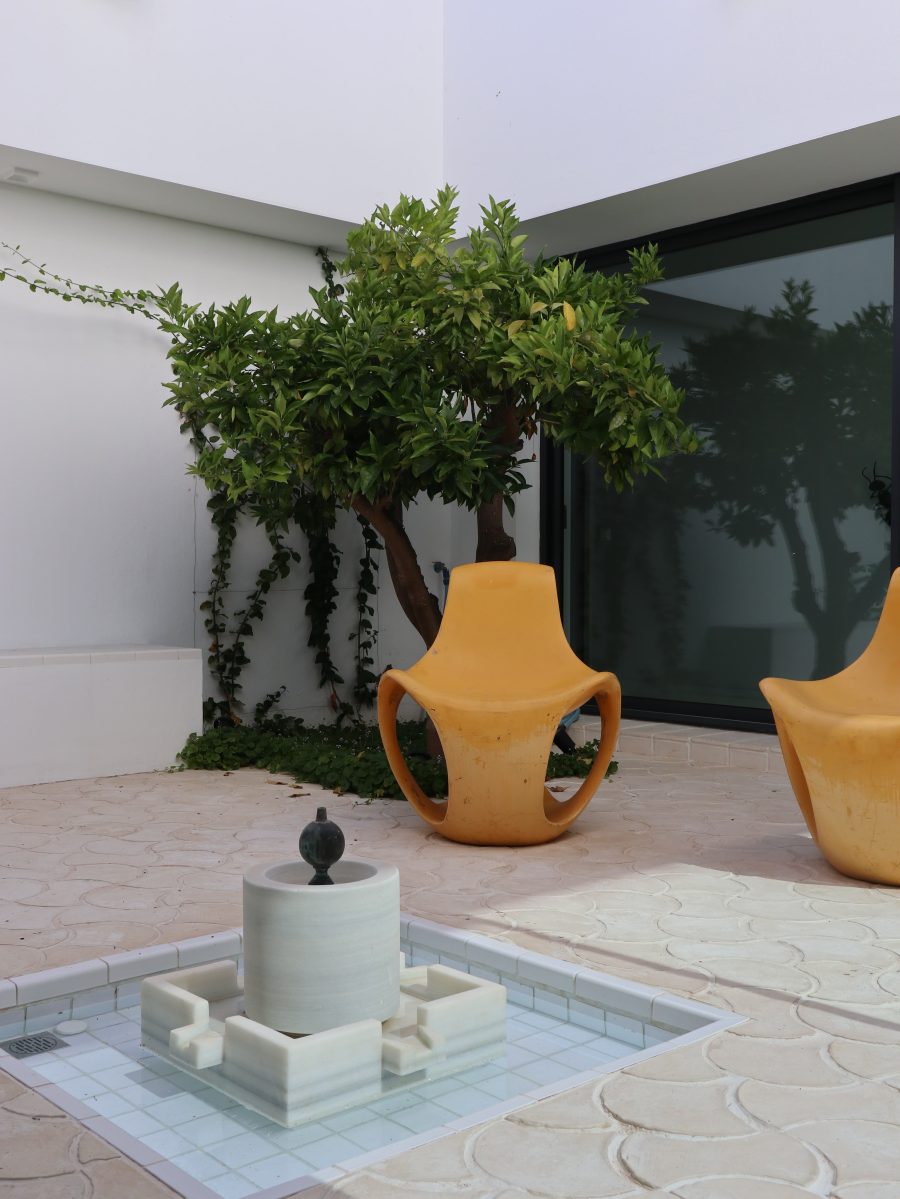


Fish scale terracotta tiles for a Neo-Rationalist style Mediterranean patio
The renovation of a luxury home on the Sotogrande golf course features our Escama 14 fish scale fired clay tile in antique white for a Mediterranean patio
The home designed by Spanish architect Domínguez-Urquijo in the 1970s is part of the Neo-Rationalist style: an architectural movement that revives the simple geometry and characteristics of 1930s Italian Rationalism.
In carrying out the renovation, both the architectural firm Chueca Studio and Alfonso Pérez-Ventana, the landscape architect in charge of the patios and gardens, sought to preserve the essence of the original design while adding details and materials that allow residents to enjoy modern amenities. It is at this intersection that our fish-scale flooring finds its place in the main patio, around which the house is organized.
Restoration through clay: a formula for uniting the past, present, and future
One of the greatest challenges posed by a restoration project like this one is preserving the original spirit of the space. In this case, the goal was to respect the Spanish neo-rationalist aesthetic of the early 1970s, which was characterized by its simplicity and clean lines. However, we find no trace in this movement of the clinical sterility that has dominated recent decades as a result of the mass production of building materials and misinterpretations of Nordic and minimalist styles.
So, how do you execute a style that allows for rich textures while also calling for restraint and visual clarity? Through solutions such as an antique white terracotta floor.
We color our handcrafted tiles using different blends of natural materials, and then fire them in our traditional Nasrid kilns, fueled by biomass. The result is an understated flooring that adapts to any style and aesthetic without sacrificing its distinct character. Handcrafted terracotta is the perfect material for bringing together the past, present, and future in any project.
The fish scale floor: a long standing staple of Mediterranean aesthetics
One of the great strengths of this design is that the geometry of the tiles creates a sense of both order and dynamism, evoking the movement of water—which takes center stage in the space.
At Todobarro, we’ve written extensively about the elements that make up a Mediterranean patio. The essence of this fundamental element of our vernacular architecture goes beyond whitewashed walls and glossy bougainvilleas: it’s a combination of structural elements and materials that creates specific spatial characteristics.
These elements are: water, vegetation, and terracotta. We know from research that this combination provides the bioclimatic conditions necessary for a courtyard to be considered purely “Mediterranean.” In this project, a fountain stands in the center of the space, there is a perimeter of native plant species, and, above all, there is terracotta paving that is white in color, which not only provides visual clarity but also helps lower the temperature.


More terracotta projects to inspire you
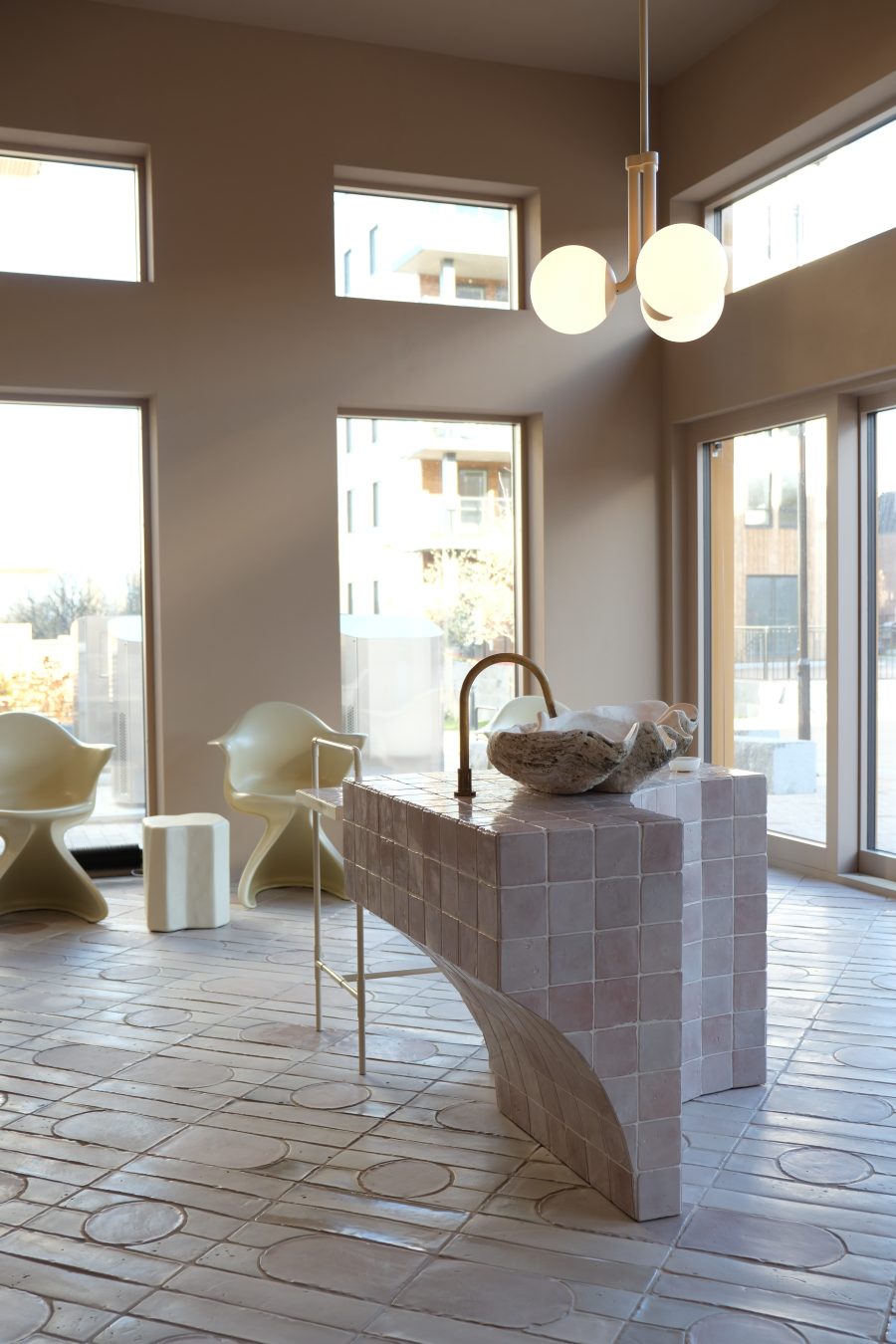
Mediterranean design makes its way into Norway with our terracotta pieces
The Oslo based firm INNE has designed a dental clinic in Asker, Norway, that offers a holistic experience to its clients and patients. The…
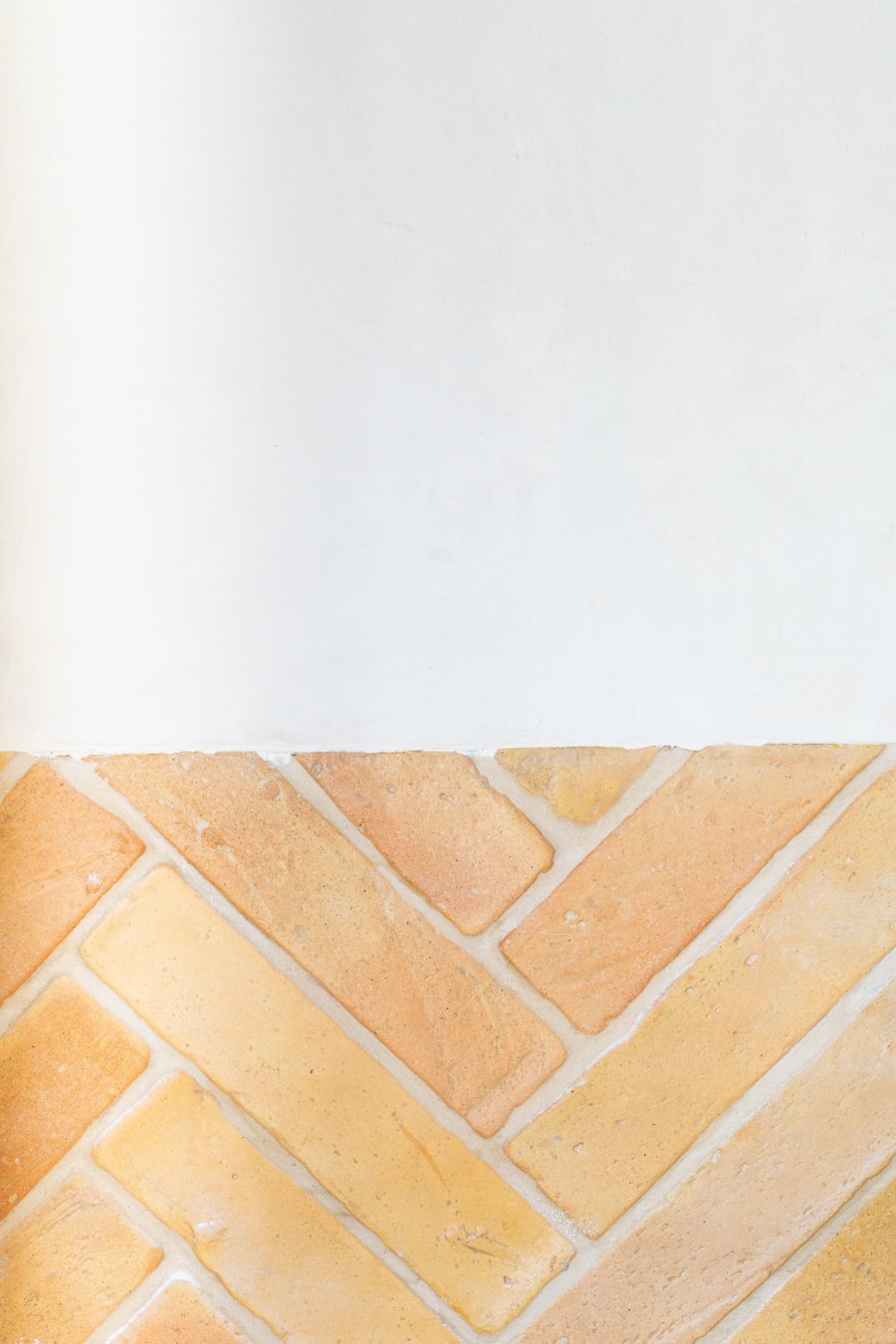
A terracotta floor for Portell Studio: natural light’s best friend
The Mallorquin studio Portell has used our rustic half brick in the Straw tone, with the Antique finish for the renovation. Located in the…
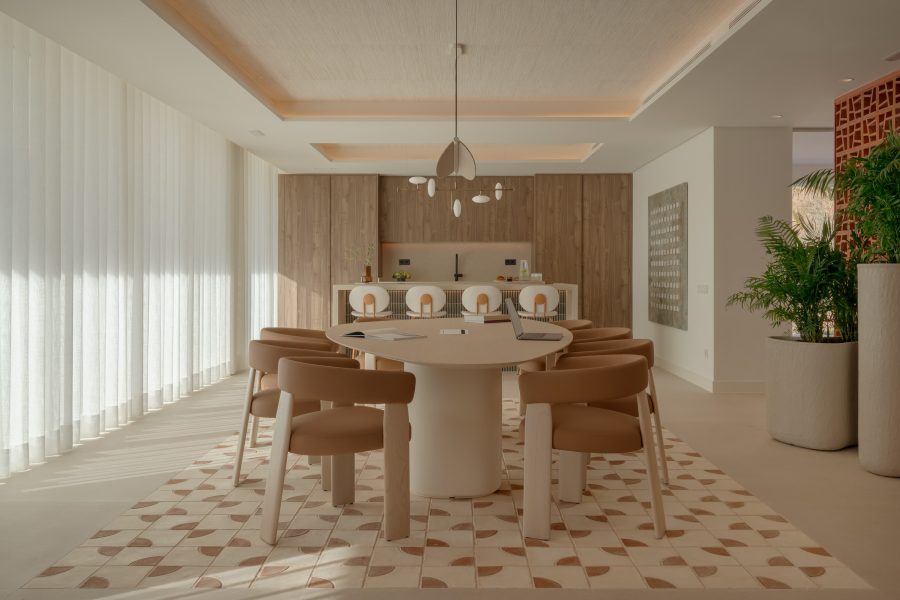
Olivos Café Lounge: the luxury of Mediterranean style
Gema Guzmán Espejo is the architect and designer behind Guze Studio, the firm that has used our products to remodel the common areas of…