

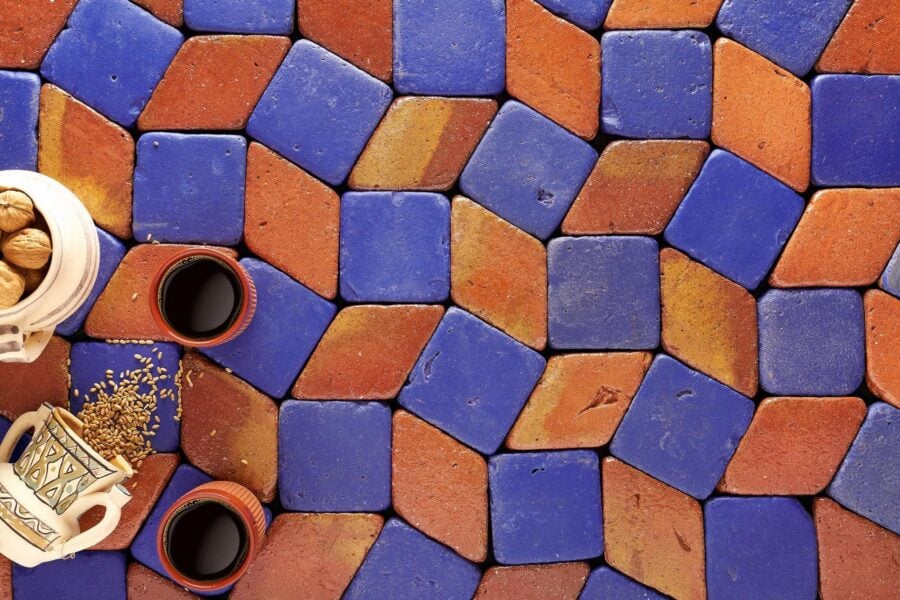


Andalusian tiles: a thousands of years old icon
Fired clay has always been part of Andalusian culture and history. Today, we pay tribute to Andalusian tiles, a key component in the architectural and constructive identity of the region.
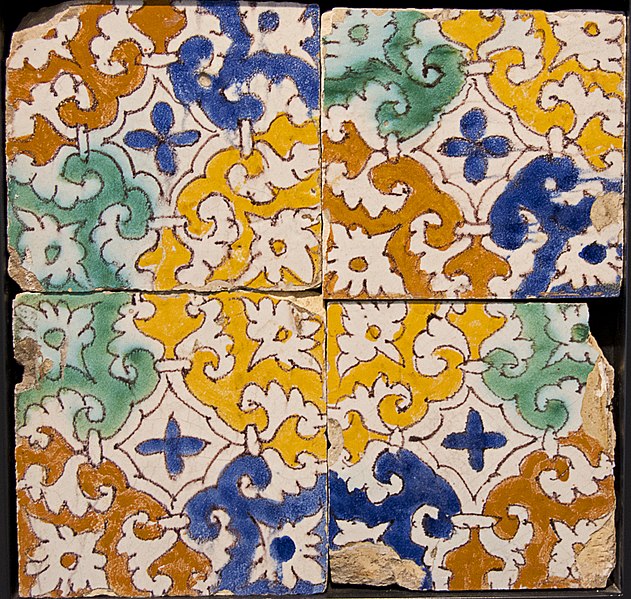
Inspired by Muslim tradition, Andalusian tiles are one of the most rooted emblems of the Andalusian cultural heritage. They constitute a sign of artistic identity and local architecture, present in monumental and historical buildings, such as the Alhambra in Granada. But they can also be easily found in private homes, and in those that are of recent construction, modern reproductions of the tiles can be found as decorative elements.
This glazed terracotta tiles clad the walls and pavements that tell the story of the many civilizations that came before us and used them, employing ancestral techniques still used in artisanal productions. Using clay, fire and a set of working hands that give shape and paint each piece, just like it was done thousands of years ago, joining aesthetics and functionality, the culture is kept alive.
The origins of Andalusian tiles
The earliest recorded apparition of tiles is in Middle East’s Mesopotamia, where archeological excavations keep to this day adding information about these ancestral populations, that can explain so much about who we are today in the XXIst century. We know that people of this region used cooked earth tiles to pave and decorate its buildings.
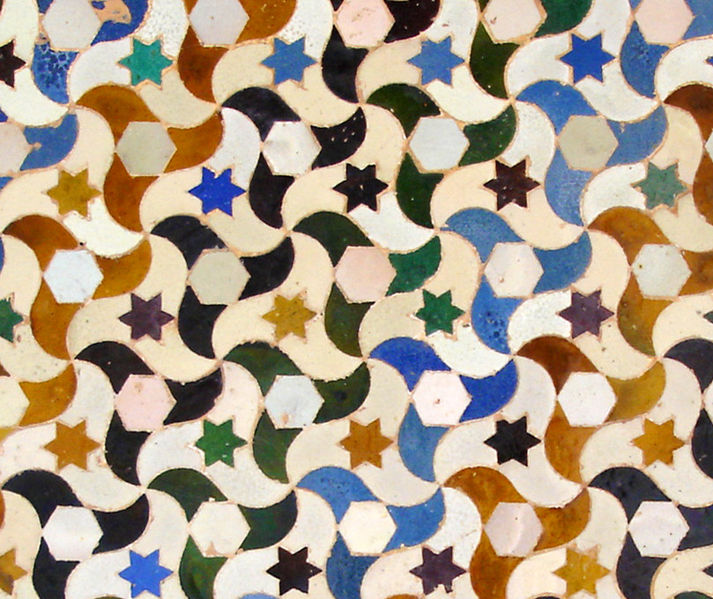
The fired clay glazed tile came to Europe through Al-Andalus, the ancient Muslim reign of today’s Spain, in 711. It is here, in Al-Andalus, where these pieces find their peak in monumental constructions like the aforementioned Alhambra, the Caliphate of Córdoba or the Alcazar of Sevilla, where it is not hard at all to stumble into Nasrid mosaics. We also have, however, record of its domestic use back then, when these Arab tiles substituted the Roman mosaics that had been employed before to clad private homes.
This pottery tradition was kept throughout the cristian Spain era, mixing with other cultural currents and giving place to new variations, that became representative of Mudejar ( a word to describe Muslims who remained in the Iberian peninsula after Christian invasion in the XVth century) art. The use of fired clay during this artistic era was constant, both in sublime interiors and flashy exteriors.
Evolution: from least to most, to start again
Tile making techniques have been used for so long that they have come to incorporate numerous influences, which have allowed the discipline to survive the innovations and advancements of each era it has coexisted with.
For instance, during the XVth century, just when the Catholic Monarchs put an end to the so called “Reconquest”, major shifts in art and architecture took place, influenced by Italian Renaissance. Glazed tiles were reinterpreted under majolica technique, characterized by an elaborate polychrome decoration, based on the representation of folliage, people, animals, etc. Geometrical mosaics gave way to figurative art, and terracotta glazed tiles turned into actual canvases.
Two centuries later, the Spanish Barroque introduced new themes: hunting, mythological or religious scenes. There was very little of the Arab tradition left in the aesthetics of the art, even if the means of production were virtually unchanged. By this point, glazed tiles were used all throughout Europe, and each country developed its own style. The discipline reached its height during the XVIIIth century, particularly in Portugal, where the whole country was clad in decorative ceramic tiles. Then the Rococó style made an appearance with a new ornamental take: a last sprint of overcharged and excesive decor.
The XIXth century is home for the Neoclassic style: panels and mosaics are simplified, at the attention is focused on color. By the end of the century, French Modernism reactivates architectural ceramics. Houses, businesses and restaurants are decorated with ornamental glazed tiles in borders, friezes and walls.
Our take on Andalusian tiles
Today we don’t have one single guideline that defines the current style. Or, better said, we have multiple. Technology allows us to imitate basically any artistic movement and mass produce tiles with whatever aesthetic we want, which strips the pieces from what gives them their identity: tradition, history, art and craftsmanship.
At todobarro we have reinvented the concept of Andalusian tiles, but we are loyal to their original production. We make our products by hand in our tile shop, where we cook them in a traditional oven and glaze them using a natural and durable mix.
As for our designs, we opt for geometrical patterns to create unique tesselations, often inspired by Arab tilework. Currently we are experimenting with color to expand our glazed tiles catalog with new and surprising tones and hues. It is in our lab where we feel the most connected to the tradition and history of the noble material that is fired clay. It is creating and playing with the material that we feel architectural ceramics come alive.

Top stories

What is the Nature Restoration Law?
The Nature Restoration Law is a European regulation approved in 2024, aiming to ensure the necessary actions and initiatives to repair damaged ecosystems and…
Acequias or irrigation ditches: an ancient knowledge making its comeback
“Acequias” (ditches) are one of the oldest existing systems of channeling and use of water. In the Iberian Peninsula we know them well: the…
What is a compensatory measure?
By definition, a compensatory measure is an action aimed to restore or repair de negative environmental impact of any give activity -usually of a…
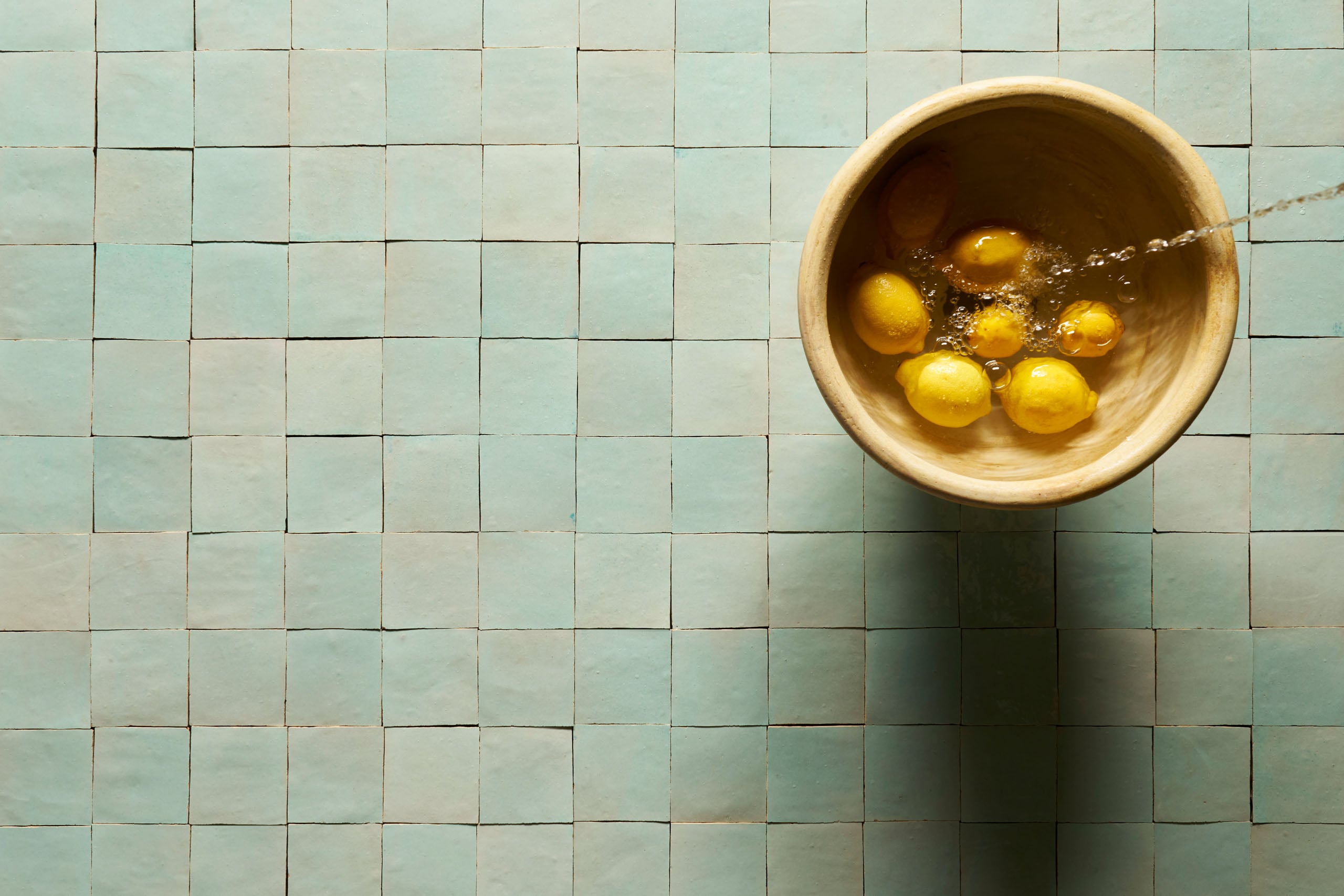
What are Zellige tiles?
The word zellige means ‘polished stone’ in Arabic. It refers to a type of traditional tile and mosaic technique characteristic of Morocco and the…
